
Chemical Labeling and SDS Requirements in Spain
Spain is an EU Member State. Chemical classification and labelling are governed by the directly applicable EU CLP Regulation (EC) No. 1272/2008, while Safety Data Sheet content is governed by REACH Annex II as amended by Regulation (EU) 2020/878. Suppliers placing hazardous substances or mixtures on the Spanish market should provide compliant SDSs and labels in Spanish and ensure that classification, UFI/poison-centre information where applicable, packaging, and any sector-specific obligations are aligned before supply.
SDS Requirements
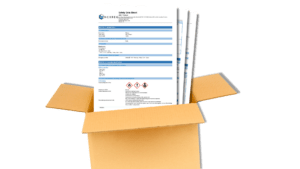
SDSs for hazardous substances and mixtures supplied in Spain must follow REACH Article 31 and Annex II, using the 16-section format required by Regulation (EU) 2020/878. The SDS must be consistent with the product’s CLP classification and label, include exposure scenarios where required, and be supplied in Spanish unless a competent authority permits otherwise. SDSs must be updated without delay when new hazard, risk management, authorisation, or restriction information becomes available, and revised versions must be provided to affected recipients.
Consumer Label Requirements
Consumer chemical products sold in Spain must be classified, labelled, and packaged under the EU CLP Regulation before being placed on the market. Hazardous consumer products generally require the product identifier, supplier name/address/telephone, nominal quantity where applicable, hazard pictograms, signal word, hazard statements, precautionary statements, and supplemental EUH statements in Spanish. Additional CLP packaging duties may apply, including child-resistant fastenings, tactile warnings of danger, and UFI/poison-centre notification requirements for certain hazardous mixtures. Sector-specific laws may also apply to detergents, biocides, cosmetics, plant-protection products, aerosols, or other regulated product categories.
Workplace Label Requirements
Workplace labels for hazardous chemicals supplied in Spain should follow the CLP label elements and remain consistent with the corresponding SDS. For substances or mixtures transferred into secondary workplace containers, employers should maintain clear hazard communication for workers through the CLP label information, workplace procedures, and SDS access. Labels and workplace hazard information should be available in Spanish for workers using the product.

Need Help with Compliance?
Nexreg assists manufacturers, importers, and distributors with Portugal SDS authoring, chemical classification, workplace labeling, consumer labeling, and regulatory compliance. Our regulatory specialists can help simplify market access and keep hazard communication documents aligned with applicable requirements.

